
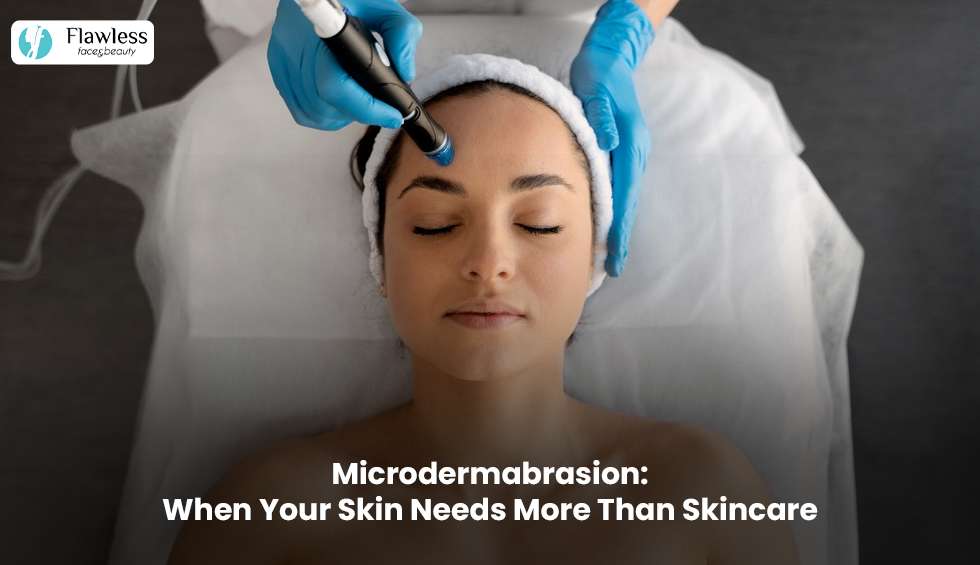
Skincare can do a lot, but sometimes your skin needs more than another cleanser, serum, or moisturiser.
If your complexion feels rough, looks dull, or has an uneven texture despite maintaining a regular skincare routine, professional exfoliation may be worth considering. Microdermabrasion is one treatment designed to refresh the surface of the skin and create a smoother-looking complexion.
It is a non-invasive beauty treatment that focuses on exfoliating the outermost layer of the skin. The process can help remove accumulated dead skin cells and leave the skin feeling softer and more refined.
But is it suitable for everyone? And what should you know before booking?
Let’s take a closer look.
What Is Microdermabrasion?
Microdermabrasion is a professional exfoliation treatment that gently removes dead skin cells from the surface of your skin.
Unlike a standard facial, the treatment uses specialised equipment to provide controlled exfoliation. This makes it different from simply using a scrub at home.
The goal is not to completely change your skin overnight. Instead, it focuses on improving the look and feel of the skin’s surface.
Many people consider it when their skin appears:
- Dull
- Rough or uneven
- Congested
- Tired-looking
- Lacking smoothness
- Uneven in texture
Your individual skin condition will determine whether microdermabrasion is an appropriate choice.
Why Does Skin Texture Change?
Your skin naturally sheds dead cells. However, dead cells can build up on the surface, contributing to a dull or uneven appearance.
Environmental exposure, lifestyle, ageing, and your regular skincare routine can also influence how your skin looks and feels.
This is one reason professional exfoliation can become part of a skincare plan.
Microdermabrasion works at the surface level, helping remove dead skin cells through controlled exfoliation. Once that surface build-up is reduced, skin can feel smoother.
It is important to keep expectations realistic. The treatment is not a cure for every skin concern, and results vary between individuals.
What Are the Potential Benefits?
One reason this treatment continues to attract attention is its focus on skin texture rather than simply providing a temporary feeling of hydration.
Potential benefits can include:
Smoother-feeling skin
Removing surface dead skin cells can help create a softer skin texture.
A fresher appearance
Exfoliation can help reduce the appearance of dullness caused by surface build-up.
More even-looking texture
Regular professional treatments may help improve the overall feel and appearance of uneven skin texture.
Better preparation for skincare
With surface build-up reduced, your usual skincare routine can feel different. However, your beauty professional can advise which products are appropriate after treatment.
A non-invasive option
For people who want professional exfoliation without a more intensive procedure, microdermabrasion can be an option to discuss with a qualified beauty professional.
Is Microdermabrasion Good for Dull Skin?
Dull skin is one of the common reasons people explore professional exfoliation.
When dead skin cells accumulate on the surface, your complexion can appear less fresh. Removing that surface layer can help reveal newer-looking skin underneath.
However, dullness can have many causes.
Sleep, hydration, sun exposure, lifestyle, skincare habits, and other factors can all affect your complexion. One treatment cannot address every cause.
Think of microdermabrasion as one part of a broader skincare and beauty routine rather than a quick fix.
Microdermabrasion for Uneven Skin Texture
Skin texture can be one of the most frustrating concerns because makeup and skincare products do not always create the smooth appearance you want.
Microdermabrasion focuses specifically on surface exfoliation, which can make it useful for people concerned about rough or uneven-feeling skin.
The treatment may be considered when your skin feels:
- Rough to the touch
- Dry on the surface
- Uneven
- Dull
- Less smooth than usual
If your concern involves deeper scarring, active skin conditions, or significant pigmentation, another treatment may be more appropriate.
That is why professional assessment matters.
What Happens During a Microdermabrasion Treatment?
The exact process can vary depending on the salon and equipment used.
Generally, your skin will first be cleansed to remove makeup, oil, and surface impurities.
The specialised device is then used to exfoliate the skin in a controlled manner. Your beauty professional works across the treatment area while considering your skin’s condition and sensitivity.
After exfoliation, suitable skincare products may be applied to help comfort and care for the skin.
The treatment itself is usually straightforward, which is one reason people consider it as part of a regular beauty routine.
Before your appointment, ask your beauty professional what their specific treatment process involves.
What Should You Do After Microdermabrasion?
Aftercare is an important part of any professional exfoliation treatment.
Your skin may feel different immediately afterwards because the surface has been exfoliated. Some people may experience temporary sensitivity or redness.
Your beauty professional can provide personalised aftercare instructions, but general care may include:
- Keeping your skincare routine gentle
- Avoiding unnecessary irritation
- Following professional product recommendations
- Protecting your skin from sun exposure
- Avoiding aggressive exfoliation immediately afterwards
- Giving your skin time to settle
Do not assume that using more products will produce better results. After exfoliation, your skin may benefit from keeping things simple.
How Often Should You Have Microdermabrasion?
There is no universal schedule.
The ideal frequency depends on your skin type, concerns, treatment intensity, and how your skin responds.
Some people may benefit from occasional treatments before important occasions. Others may discuss a longer-term treatment plan with their beauty professional.
Your skin should guide the schedule rather than simply following a fixed number of appointments.
If you are new to professional exfoliation, a consultation is a sensible starting point.
Is Microdermabrasion Suitable for Everyone?
No single beauty treatment is suitable for everyone.
If your skin is highly sensitive, irritated, sunburned, or experiencing an active skin condition, microdermabrasion may not be recommended at that time.
You should also tell your beauty professional about relevant skincare products, treatments, medications, and skin concerns before your appointment.
Being open about your skin history helps your beauty professional decide whether the treatment is appropriate.
Microdermabrasion vs At-Home Exfoliation
There is nothing wrong with having exfoliation as part of your home skincare routine.
The difference is the level of control and professional treatment involved.
At home, you might use a cleanser, exfoliating product, or chemical exfoliant. Microdermabrasion uses specialised equipment under professional guidance.
That does not mean professional treatment should replace your daily skincare.
In fact, the two can work alongside each other when planned properly.
A simple routine at home combined with occasional professional treatments can be more practical than constantly changing products.
When Should You Consider Professional Advice?
Consider speaking with a beauty professional if:
- Your skin texture has changed recently
- Your current skincare routine is not giving the results you want
- You are unsure which exfoliation method suits you
- Your skin reacts easily to new products
- You are planning treatment before an important event
- You want to understand your options before booking
A consultation gives you the opportunity to discuss your concerns instead of choosing a treatment based solely on an online trend.
Choosing a Beauty Salon for Microdermabrasion
Where you have your treatment matters.
When searching for microdermabrasion in Christchurch, look beyond price alone. Consider the salon’s treatment experience, consultation process, hygiene standards, location, and aftercare guidance.
You should feel comfortable asking questions before the appointment.
At Flawless Beauty, clients can discuss their beauty concerns and explore professional treatment options suited to their individual needs.
The goal should not be to book the most intensive treatment available. It should be finding an option that makes sense for your skin.
Make Your Skincare Routine Work Smarter
Good skincare does not always mean adding more products.
Sometimes, your skin may benefit from professional exfoliation that complements what you already do at home.
Microdermabrasion can be worth considering if dullness, roughness, or uneven texture is stopping your skin from looking and feeling its best.
The right approach starts with understanding your skin rather than following every new beauty trend.
If you are considering microdermabrasion in Christchurch, speak with the Flawless Beauty team about your skin concerns, treatment options, and what to expect before booking.
Ready to give your skincare routine a professional boost? Contact Flawless Beauty to discuss microdermabrasion and find out whether it is suitable for your skin.
FAQs About Microdermabrasion
1. What is microdermabrasion used for?
Microdermabrasion is mainly used for controlled surface exfoliation. It can help improve the look and feel of dull, rough, or uneven skin texture.
2. Is microdermabrasion painful?
Most people describe the treatment as manageable and comfortable, although the sensation can vary. Your beauty professional can explain what you are likely to experience.
3. Can microdermabrasion help with dull skin?
It may help improve the appearance of dull skin by removing accumulated dead skin cells from the surface. Results vary depending on individual skin condition.
4. How long does microdermabrasion take?
Treatment time can vary depending on the area being treated and the salon’s process. Ask your beauty professional how long your appointment is expected to take.
5. Can I wear makeup after microdermabrasion?
This depends on your skin and the advice provided by your beauty professional. It is generally sensible to follow personalised aftercare instructions rather than applying products immediately without guidance.
6. How often can I have microdermabrasion?
There is no single schedule for everyone. Treatment frequency should depend on your skin, concerns, and professional recommendations.
7. Is microdermabrasion suitable for sensitive skin?
It may not be suitable for everyone with sensitive skin. If your skin is easily irritated, discuss this with your beauty professional before booking.